Day 1 (Sept 19, 2024): Arrival in Antananarivo – a night under the gecko's watch
The journey begins the way most long journeys do: with a queue at check-in in Copenhagen, and that particular kind of tiredness that sets in long before the plane has even left the ground. After a change of planes in Paris, we land well after dark in Antananarivo — known to everyone here simply as Tana.
A driver takes us straight from the airport to a small hotel tucked in the shadow of the trees, where a private bungalow waits for the night. The real welcome, though, comes not from the staff but from a permanent resident of the room — a gecko that takes up the night watch without a word and keeps the mosquitoes at a respectful distance until dawn.
The first night on Madagascar smells of dust, damp air, and something harder to name — the scent, perhaps, of something just beginning.
Day 2 (Sept 20, 2024): A city of contrasts, and the first chameleons
The day starts early, the sun barely up, as the bus pushes through an Antananarivo that feels both alive and half falling apart at once. Through the window, images slide past: men carrying sacks of charcoal on their backs, women selling fruit stacked into towering pyramids by the roadside, and a thin haze of charcoal smoke settling over the city like a lid. It isn't beautiful in any conventional sense, but it's hard to look away from.
The first stop is the Peyrieras reptile reserve, where paths wind through dense undergrowth and the guides seem to have an almost supernatural eye for spotting what the rest of us miss: a chameleon moving with a slowness that suggests time simply doesn't apply to it, a small frog stuck to a leaf like a drop of green paint, a gecko vanishing into the bark just before the photo gets taken. Here, Madagascar's famous biodiversity stops being a number in a brochure and becomes something you can watch blink.
In the afternoon we push on toward Andasibe National Park, where the rainforest waits — denser, darker, and full of sounds we can't yet put names to — and where, we're told, the lemurs have already begun their evening song, long before we arrive.
Day 3 (Sept 21, 2024): The rainforest's voices, and hands at work
We wake to a small lake lying so still in front of the cabin that it almost looks painted. We spend the morning deep in Andasibe's dense rainforest, led by local park rangers who can point out a bird in the canopy before we've even understood what we're looking for, and who seem to know every sound in the forest the way you know a language you grew up speaking.
We trace the lemurs' movements through the treetops — more their shadows and the sway of branches than the animals themselves — breathing in air heavy with rotting leaves, wet earth, and something faintly sweet we can't quite name. At the exit, a few locals sell the first handmade souvenirs, and it's already clear this isn't just a transaction, but something closer to a conversation.
Later in the day we stop at a roadside quarry, where women and children turn great boulders into gravel by hand, stone by stone, hour after hour. It's a hard thing to watch, and it doesn't leave you with an easy feeling — only a reminder of how differently an ordinary day can look, depending on where on the planet you happened to be born.
By the coast that evening, we watch fishermen hauling in small shrimp with old mosquito nets for dinner — a scene not staged for us, simply what it is: an ordinary day in a life quite different from our own.
Day 4 (Sept 22, 2024): Crawling toward Antsirabe
The road to Antsirabe is narrow, pitted with holes, and entirely indifferent to how fast anyone would like to be going. In exchange, it gives plenty of time to watch the life unfolding along its edges: ox carts moving at their own unhurried pace, overloaded trucks squeezing past with only a few centimeters to spare, and tractor trailers loaded with everything from vegetables to entire families.
Along the way we stop at a small village church just as Sunday service is letting out, and we're met with a few friendly nods and curious glances — more telling, in their way, than any grand welcome could have been.
In Ambatolampy we stop at a small aluminum foundry, where old cooking pots and scrap metal are melted back down over open fires, handled with bare hands and an apparent indifference to the heat. Afterward we visit a workshop where the same scraps of metal and plastic are turned into small, detailed models of cars and bicycles — work that demands a patient eye and a steady hand, and that's hard to fully grasp until you've held one of the figures yourself.
Day 5 (Sept 23, 2024): Fossils, colonial history, and green terraces
In Antsirabe we stop at the Hotel des Thermes, a building that still carries traces of French colonial architecture between peeling paint and long, empty corridors — a place that must once have meant something grand, and now mostly speaks of the time that has passed since.
From there we head to a small fossil and mineral workshop, where tables are covered in stones millions of years old, and where, for a moment, you can choose a small piece of the island's past to carry home — an ammonite, a flake of mica, a crystal still holding the memory of a sea that vanished long ago.
The rest of the day is spent driving toward Ranomafana National Park, a long stretch of road, but one where the eyes rarely get to rest: it winds up and down the mountainsides, past rice terraces stepping down toward the valley floor like green stairs, and villages where roof tiles are shaped from clay and left to dry in the sun, row after row.
In Ambositra we stop for lunch, and before we move on, a group of local musicians and dancers gathers around us — not a staged show, more an interruption in the rhythm of the day, one that gets your legs following along even after hours on the bus. Late in the day, tired and dusty, we finally reach the national park.
Day 6 (Sept 24, 2024): Through Ranomafana's UNESCO-listed rainforest
Ranomafana is on UNESCO's World Heritage list, and it only takes a few minutes in the forest to understand why. Our guides were born and raised here, and they move through the dense, dripping jungle with a confidence that seems almost impossible while the rest of us trip over roots and slick stones.
We spend hours searching for the forest's twelve lemur species and its shy chameleons, masters of vanishing right when you think you've finally spotted one. Rain follows us for most of the way, but it's hard to call it a bad experience — just a wet one.
After a change into dry clothes and a cup of coffee, we get a small glimpse of daily life in the village before darkness falls and we head out again — this time with flashlights in hand, tracking the tiny mouse lemur and the other creatures that only wake once the rest of the forest has gone to sleep.
Day 7 (Sept 25, 2024): Toward Manakara, through villages and a promise to a school
We set course for Manakara, a fishing town and harbor on the Indian Ocean, and half an hour into the drive we already stop at the village of Ambodipaiso Avarata. The village chief comes out to meet us and leads us into the communal meeting house, where we sit for a while and talk, while curious children peer in through the doorway. On the way out we buy a few handmade souvenirs from the residents — it doesn't feel like a transaction so much as a gesture passed in both directions.
Later we stop at a school near Andranomaintso. We greet the children and their teacher, and talk turns to what we might contribute to make daily life here a little easier — not grand promises, just small, concrete things that could make a difference.
In Manakara we're put up in a small bungalow at Hotel Parthenay Club, where we quickly discover we're not alone: a small army of crabs patrols the grounds with a confidence that suggests they were here long before we were. We take a walk through town and end up at a restaurant tasting the local rum as the sun sinks over the canals.
Day 8 (Sept 26, 2024): Colonial-era canals and the scent of vanilla
The day begins at five with a sunrise over the Indian Ocean, as fishing boats quietly set out for deeper water and women along the shore work at catching shrimp and small fish for the day.
After breakfast we take a boat out onto the canals dug around 1900, during the French colonial period, still one of the region's most important routes. Along the way we pass fishermen returning with the day's catch while their families wait on the beach — a meeting that repeats itself every day, year after year, with no audience at all. We continue on to a small village where local plants are distilled into essential oils and aromatics, the air in the workshop thick and sweet enough to make you slightly dizzy.
Lunch is eaten on the beach, cooked over an open fire from the day's catch — a large fish and a couple of lobsters still swimming in the sea only a few hours earlier. In the afternoon we drive to a vanilla plantation, where we hear the story of the spice: how labor-intensive it is to grow, and how little of the price paid in a shop back home actually makes its way back to the village. We buy vanilla pods and pepper to take home, with a slightly different understanding of what they actually cost.
Day 9 (Sept 27, 2024): Sand between the toes, and the road back to the highlands
At five again, we're up, this time for a short walk along the beach, where the sunrise and the fine sand between our toes become the morning's quiet ritual.
After breakfast we drive back toward the highlands and Fianarantsoa. We take a short break at a village and wander through the street market, where everything from vegetables to plastic shoes lies side by side on blankets in the dust. Later we stop briefly at a school we'd visited earlier, just to say hello again.
We spend the night in the middle of town, at a hotel run by a Chinese family — a small, unassuming place that, more than anything, is a reminder of how many different stories cross paths on this island.
Day 10 (Sept 28, 2024): Sisal, silk, and lemurs at Anja
The bus heads toward Isalo National Park, with several stops along the way. First a sisal workshop, where we watch the plant turned into fiber and then into placemats we carry home with us. The next stop offers a taste of local wine, and the third is a silk workshop, where we follow the process from cocoon to fabric before each of us leaves with a scarf.
We eat lunch at the Anja Community Reserve, then set off afterward in search of lemurs among the rocks. The reserve has grown alongside rising tourism, and it's clear this has given the local population both an income and a reason to look after what's left of the surrounding nature.
We arrive at the hotel late in the day, just as the sun sets behind the mountains in the background, and each get a small bungalow to ourselves.
Day 11 (Sept 29, 2024): Savanna, canyons, and the rocks of the dead
Isalo splits us up for a day. Magda stays at the hotel, where a massage and the pool win out over the heat, while Tomasz heads out with the group on a hike through savanna and canyons. We stop at a small lake along the way, where a few of us risk a quick dip in the cool water — a break that feels earned after hours in the sun.
The landscape is parched, dotted with scattered trees and deep canyons carved out by water and wind over thousands of years, and the thermometer edges toward 37 degrees. Along the way we pass several burial sites — caves set high in the rock face, where the dead rest temporarily at first, before later being moved to their final grave, coffin and all, set deep inside the mountain. It's a sight that resembles nothing familiar from home, and one you walk away from in silence.
We eat lunch in the middle of it all, surrounded by green vegetation and lemurs that seem just as uninterested in us as we are fascinated by them.
Day 12 (Sept 30, 2024): Sapphires, baobabs, and the smell of rum
The journey continues toward Ifaty. The first stop is a village by the river, where sapphires are found in sacks of sand hauled in from the riverbed, and where trading in stones happens right there, hand to hand and by eye, with no visible authority setting the prices.
We also stop at a small village surrounded by baobab trees, where Tomasz and Michael run around with the camera in a fairly hopeless attempt to catch up with a few fast geckos. At the next stop, a village that distills rum, the smell is so strong it can almost be felt as a physical wall before you even step inside.
Late in the afternoon we reach Hotel Nautilus, where the evening is spent by the pool and on a walk along the beach as the sun goes down.
Day 13-14 (Oct 1-2, 2024): A fishing village, a last baobab, and the road home
October 1st brings two excursions. The first takes us to a nearby fishing village, where we walk the beach and meet local fishermen and their families — a farewell that feels fitting, given how many times that exact encounter has repeated itself over the course of the trip. The second excursion leads to a reserve filled with baobab trees, a last chance to stand among these silent, ancient giants before leaving the island.
On October 2nd we spend the morning resting, gathering strength for the journey home. The flight ends up taking 26 hours in total, mostly due to delays along the way — a reminder that Madagascar isn't quite ready to let go, even at the airport.
Thanks to Stjernegaard Rejser, and especially to Mogens, our tour guide, for fourteen days that gave more than could ever fit in a suitcase. And to our fellow travelers: thank you for the company.
Links to Stjernegaard Rejser articles
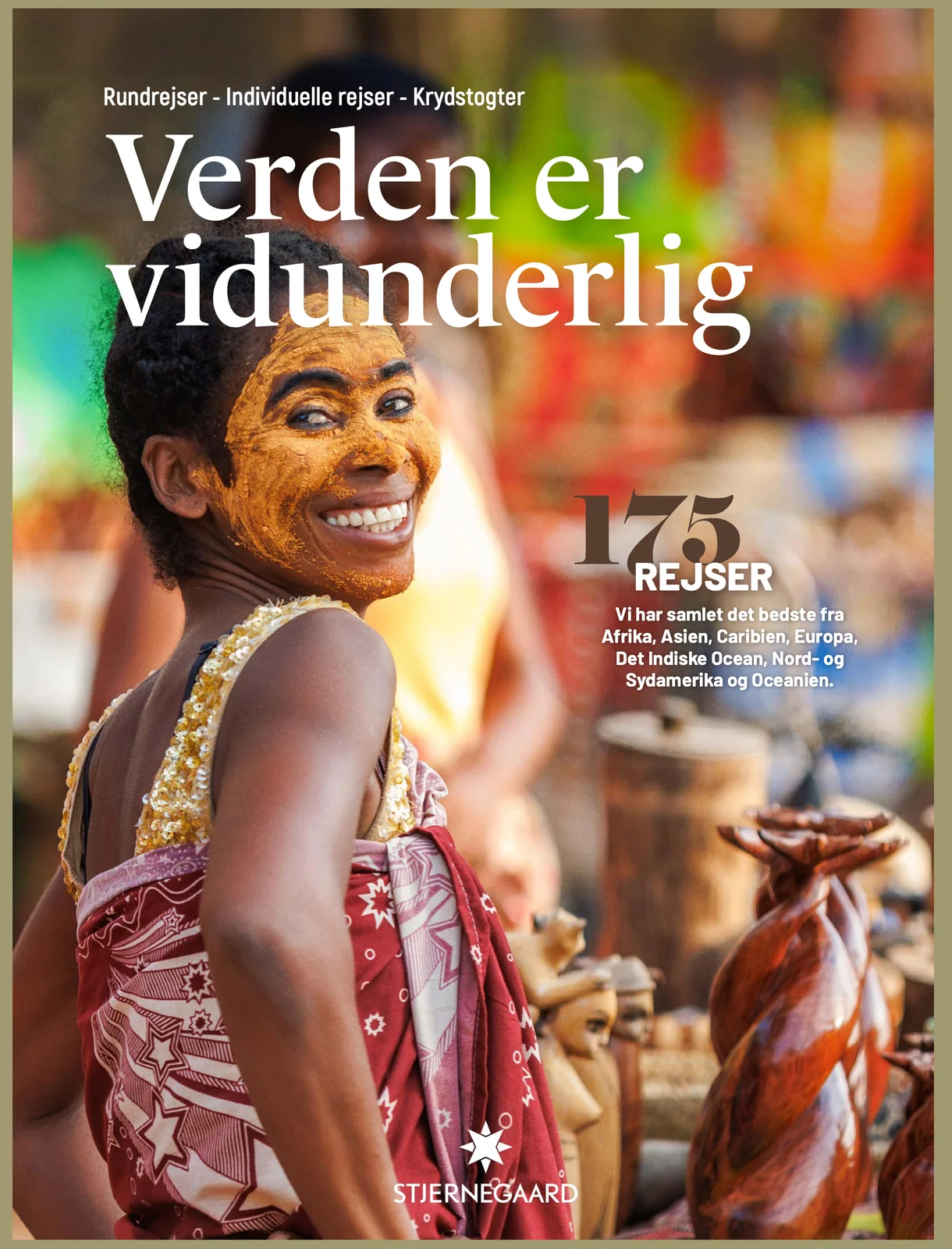
Stjernegaard's travel catalogue with photos from our trip